
Views: 0 Author: Site Editor Publish Time: 2025-11-18 Origin: Site
Have you ever opened a kitchen cabinet only to realize the space is either too shallow for your dishes or so deep that items get lost in the back? Many homeowners are surprised to learn that the depth of kitchen cabinets is not random—it follows specific standards that shape how comfortable and functional a kitchen feels. Understanding these measurements can make the difference between a smooth cooking experience and daily frustration.
In kitchen design, “cabinet depth” refers to how far a cabinet extends from the wall toward you. This may sound simple, but it plays a major role in storage capacity, reachability, and overall workflow. Standardized cabinet depths exist for a reason: they ensure that appliances fit correctly, counters remain practical, and everyday tasks stay comfortable. Knowing these dimensions is especially important before starting a remodel, as different cabinet styles and brands offer slightly different depth options.
In this post, you’ll learn what the standard depth for kitchen cabinets is, why these measurements matter, and how variations in cabinet types can affect your layout. We’ll walk through the depth standards for base, wall, and tall cabinets, and help you understand which option is right for your space.
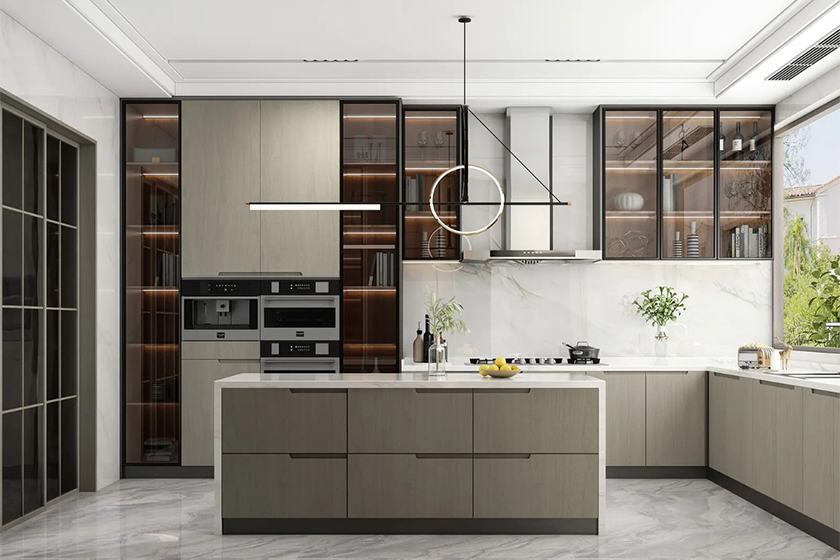
When people talk about the “depth” of kitchen cabinets, they usually mean one simple measurement: the distance from the very front of the face frame to the back panel of the cabinet box. It’s a straight, front-to-back line. This number helps builders and designers plan how far cabinets extend into the room.
Many homeowners confuse cabinet depth and countertop depth. Countertops extend slightly farther because of the overhang, so the numbers never match exactly. Cabinets sit underneath the counter, while the countertop adds an extra inch or more for workspace and comfort.
The way depth is measured also changes based on cabinet style. Framed cabinets use a front face-frame that adds extra structure. Frameless cabinets skip this frame, so the measurement shows the true box depth. It may look small, but the difference affects how much space you get inside the cabinet and how the doors attach.

Cabinets always list the exterior depth, but the interior depth is smaller. The walls, back panels, and door hardware take up space. Even a half-inch loss can change how plates, trays, or appliances fit inside.
This reduced interior space affects pull-out drawers even more. Drawers need room for slides, brackets, and the drawer box itself. A cabinet labeled “24 inches deep” may only offer around 21–22 inches of usable drawer length. That’s why organizers, slide-out shelves, and deep drawers all have size limits based on the cabinet’s exterior depth.
Below is a simple comparison:
| Cabinet Feature | Exterior Depth | Interior Depth | Notes |
|---|---|---|---|
| Standard Base Cabinet | 24 in. | 21–22 in. | Drawer slides take extra space |
| Standard Wall Cabinet | 12 in. | 10–11 in. | Shallow interior for easy reach |
| Frameless Cabinet | Same as box | More interior room | No face frame blocking access |
Standard depths don’t happen by accident. They follow rules that help kitchens feel safe and easy to use. Appliance makers design dishwashers, ovens, and refrigerators around these same measurements, so everything fits together.
Ergonomics play a big role, too. Depth affects how far you reach for items, how comfortable you feel at the counter, and how you move around the cooking space. Cabinets need enough room for storage, but not so much room that things become hard to reach.
Construction shops also rely on standard measurements to speed up production. It lets manufacturers create parts that work across many cabinet styles. Installers get predictable results, and homeowners get a kitchen that functions well every day.
Safety comes into play as well. Upper cabinets use shallow depths so they don’t hang too far over the counter. This prevents accidents, gives better head clearance, and creates a more open feeling in the kitchen.

Most base kitchen cabinets use a 24-inch exterior depth. This size feels natural for everyday cooking, because it puts tools, dishes, and ingredients within easy reach. A 24-inch depth also leaves enough room for plumbing, electrical lines, and standard appliances. Designers prefer this depth since it creates a balanced work surface and supports most countertop materials.
Going deeper may sound helpful, but it can make storage harder to use. Items start to hide in the back, and you may need to bend or reach more often. Deep cabinets also reduce floor space, which can cause tight walkways in small kitchens. The 24-inch depth solves these problems by giving people a comfortable reach zone.
Base cabinets come in more sizes when the kitchen layout is tight or unusual. You often see shallower depths in compact homes, galley kitchens, or older houses. Here are common variations:
12-inch depth — works in extra narrow walkways.
15-inch depth — helpful for slim storage areas.
18-inch & 21-inch depths — good for tighter kitchens that still need lower cabinets.
Some custom builders also offer extra-deep options:
27-inch depth
30-inch depth
These deeper cabinets add storage space, but they require more room and stronger drawer hardware.
| Depth Size | Pros | Cons |
|---|---|---|
| Shallow (12–18") | Saves space, easy reach | Limited storage |
| Standard (24") | Best balance of space & usability | Interior depth slightly reduced by hardware |
| Extra-Deep (27–30") | More storage, fits large pots | Harder reach, costly, not ideal for small spaces |
Not all base cabinets follow one depth. Many specialty cabinets need different sizes based on purpose.
Sink base cabinets
They hold plumbing, so the full 24-inch depth helps hide pipes. The interior depth may shrink because of drain lines and the sink bowl.
Corner base cabinets
Corner spots use unique shapes to solve space problems:
L-shaped cabinets
Diagonal corner cabinets
Blind corner cabinets
Designers often adjust depth to make turntables, pull-outs, or swing-out trays fit well.
Drawer base cabinets
Drawers depend heavily on depth. Drawer slides need space to extend fully, so the exterior depth controls how far the drawers can reach. Deeper drawers make it easier to store large pots or stacked plates, but they need strong hardware.
Countertops extend past the front of base cabinets for comfort. This creates a smooth edge for working, chopping, or leaning.
Standard overhang: 1–1.5 inches
Final countertop depth: usually 25–26 inches
Different countertop materials handle overhang in their own way:
| Material | Typical Overhang | Notes |
|---|---|---|
| Quartz | 1–1.5 in. | Very stable, good for larger overhang |
| Granite | 1–1.25 in. | Needs support when depth increases |
| Laminate | Around 1 in. | Edge band limits extra overhang |
Toe-kicks sit at the very bottom of base cabinets. They make it easier for your feet to rest under the cabinet while you stand at the counter. Without them, you would lean forward more, which causes discomfort.
Typical toe-kick size:
Height: about 3.5 inches
Depth: about 3 inches
Toe-kicks improve balance, reduce strain on your back, and let you stand closer to the counter while cooking or washing dishes.
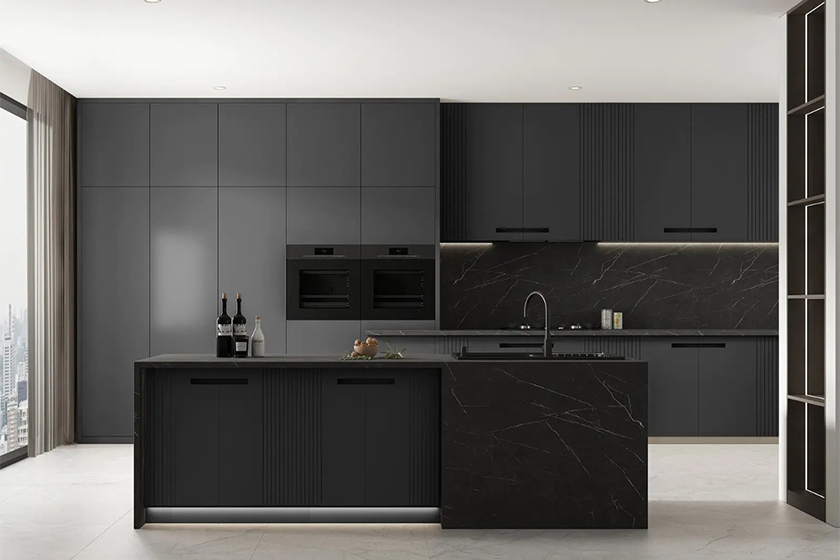
Most wall cabinets use a 12-inch depth. This size keeps the kitchen feeling open and helps people reach items easily. A shallow upper cabinet also prevents head bumps when you lean over the counter to chop, mix, or wash dishes. It gives your arms plenty of space while cooking, so the counter stays the main workspace.
A 12-inch depth works well for plates, cups, and pantry items. It stores the things you reach for every day, but it doesn’t block your view or crowd the counter area. Designers rely on this size because it fits most kitchen layouts.
Some kitchens need more storage or need cabinets that line up better over tall appliances. In those cases, deeper upper cabinets come in handy.
15-inch upper cabinets — common in modern kitchens. They store larger dishes and make the kitchen look more updated.
18–24-inch upper cabinets — usually placed above refrigerators. These match the depth of the appliance so the fridge doesn’t look like it sticks out too far.
Deeper uppers for special needs — helpful for big serving bowls or wide platters. It gives more room without using extra floor space.
Here’s a quick comparison:
| Depth | Best Use | Notes |
|---|---|---|
| 12" | Everyday dishes | Light, easy to reach |
| 15" | Larger plates, modern look | Slightly deeper reach |
| 18–24" | Above refrigerators | Creates a clean, built-in style |
Upper cabinets come in several heights, and each size works better in kitchens that use different ceiling heights.
Common upper cabinet heights:
30 inches — works in most standard kitchens
36 inches — reaches closer to the ceiling
42 inches — best for tall ceilings or full-height designs
Ceiling height matters here. Kitchens that use 8-foot ceilings often choose 30-inch or 36-inch cabinets. Kitchens that use 9-foot or 10-foot ceilings can handle taller wall cabinets or stacked cabinets for extra storage.
Stacked cabinets add a small second row at the top. They fill space, add style, and prevent dust from settling above the cabinets.
The space between the countertop and the bottom of the upper cabinets shapes how comfortable the kitchen feels. Most designs leave 15–20 inches of open space. This gives room for small appliances, cooking tasks, and backsplash installation.
Some people adjust this spacing for comfort or special equipment:
Taller users may want more room
Shorter users may want the cabinets lowered
Large appliances, like tall coffee machines, may need extra clearance
Full-height backsplashes may change where cabinets land
This spacing helps create a kitchen that fits your daily habits and gives you easy access to dishes, spices, and cookware.
Tall pantry cabinets give a kitchen extra storage without taking up more floor space. They come in two main depth options, and each one works best for a different layout.
Shallow pantries (12")
A 12-inch pantry keeps everything visible. You can see labels easily, and nothing hides behind bigger items. Many people use this depth in smaller kitchens, since it takes less space and feels lighter along the wall.
Full-depth pantries (24")
A 24-inch pantry matches the depth of standard base cabinets. It holds large cereal boxes, small appliances, and bulk items. The big downside: things can get lost in the back. That’s why deeper pantries often include pull-out trays or roll-out shelves. These pull-outs bring items forward, so you don’t have to lean inside the cabinet or move things around.
Here’s a quick comparison:
| Pantry Type | Depth | Best For | Notes |
|---|---|---|---|
| Shallow | 12" | Small kitchens, canned goods | Easy visibility |
| Full-Depth | 24" | Large kitchens, bulk storage | Pull-outs improve access |
Oven towers and microwave cabinets need enough depth to fit appliances safely. These cabinets usually stay close to a 24-inch depth, but adjustments may happen depending on the model.
Appliance clearance
Many built-in ovens and microwaves need space behind them for plugs, wiring, and heat release. Installers follow the manufacturer’s cutout specs to make sure the appliance fits without sticking out.
Ventilation
Ovens and microwaves create heat, so they need proper airflow. The cabinet design may include open space behind the appliance or special panels that let heat escape.
Standard cutouts
Most ovens use a standard opening that allows the front trim to sit flush. Some models need an extra inch of depth. If the appliance is deeper than normal, the cabinet maker may change the box depth or use a spacer so it aligns cleanly.
Tall utility cabinets help store household items that don’t fit well in regular kitchen cabinets. They come in depths similar to pantry cabinets, usually 12–24 inches.
Broom storage
A narrow, tall cabinet keeps brooms, mops, dusters, and even a small vacuum upright. A 12–15 inch depth works well because it saves wall space and still holds everything.
Cleaning supplies
A deeper utility cabinet (18–24 inches) leaves room for buckets, detergents, and larger cleaning tools. Shelves or pull-outs help organize bottles and supplies so nothing gets buried in the back.
Multi-functional household cabinets
Some tall cabinets combine broom storage, drawers, and adjustable shelves. Depth affects how flexible the inside layout feels. A deeper cabinet offers more setup options, while a shallow cabinet works better for narrow kitchens.
These tall cabinets help keep the kitchen tidy, store supplies in a single place, and make everyday chores easier to manage.
The way a cabinet is built shapes how much interior space you get. Framed cabinets use a front face-frame that adds strength, but it also reduces the opening size. This frame takes a bit of room inside, so drawer boxes and pull-out shelves end up slightly smaller.
Frameless cabinets skip the face-frame and rely on thicker sides for support. Since there’s no frame blocking the front, you get more interior depth and wider drawer space. Many people choose frameless styles when they want maximum storage in a small kitchen.
Here’s a clear comparison:
| Feature | Framed Cabinet | Frameless Cabinet |
|---|---|---|
| Interior Depth | Slightly reduced | More interior space |
| Drawer Box Size | Smaller | Larger |
| Access Opening | Narrower | Wider |
| Style | Traditional feel | Modern look |
These construction details may seem tiny, but they play a big role in how well pots, pans, and baking trays fit inside the cabinet.
RTA cabinets offer fast shipping and easy assembly, but the depth options stay limited. Most RTA brands stick to standard measurements like 12", 24", or specific pantry sizes. Because the pieces are pre-cut, it’s hard to adjust the depth or request special sizes.
If your kitchen needs a unique depth—for example, a shallow base cabinet for a tight walkway—RTA cabinets may not offer the right size. They work well when you want standard dimensions, but they don’t provide much freedom beyond that.
Semi-custom and custom cabinets give you more flexibility. Semi-custom models allow small changes, like adding an extra inch or reducing a cabinet depth for a special appliance. Custom cabinets go even further. They can match unusual layouts, older homes, or specialty storage needs.
Depth flexibility depends on material thickness and the builder’s equipment. Some cabinet makers limit how deep a drawer can go because thicker drawer slides or heavy pots may strain the hardware.
Custom cabinets cost more. They require extra labor and planning, especially when adjusting depth beyond standard guidelines. But you gain a kitchen that fits your space, your habits, and your style.
Below is a quick overview:
| Cabinet Type | Depth Flexibility | Cost Level | Best Use |
|---|---|---|---|
| RTA | Low | $ | Simple layouts |
| Semi-Custom | Medium | $$ | Small adjustments, moderate budgets |
| Custom | High | $$$ | Unique spaces, specialty depths |
Countertops always extend past the front of base cabinets. This extra inch or so creates a smooth, safe edge that protects the cabinet doors and gives your hands more room to work. The overhang also hides tiny gaps between the cabinet and the wall, so the kitchen looks cleaner and more polished.
A deeper countertop helps appliances sit flush. Dishwashers and ranges often line up better when the counter goes beyond the cabinet box. It keeps the front surfaces even, so the kitchen gets a seamless, built-in look. Most counters reach a total depth of 25–26 inches, while base cabinets stay at 24 inches.
Here’s a quick view:
| Feature | Base Cabinet | Countertop | Reason |
|---|---|---|---|
| Standard Depth | 24" | 25–26" | Overhang + appliance fit |
| Visible Overhang | — | 1–1.5" | Safety + comfort |
| Main Benefit | Storage | Work surface | Better workflow |
Some kitchens need more workspace, so extra-deep countertops become a smart choice. A deeper surface helps when you handle big appliances or large meal prep tasks. It also gives you more room behind the sink or range for tools, spices, or décor.
For large appliances
Extra depth keeps bulky mixers, espresso machines, and air fryers from crowding the front edge. It also prevents cords from hanging awkwardly over the counter.
For extended workspace
A deeper counter feels more open. Bakers love the extra room for rolling dough, and families appreciate the extra buffer between cooking and walking paths.
When deeper counters improve workflow
Kitchens that use island seating or long prep zones benefit from the added depth. It creates more comfort, more elbow room, and fewer spills reaching the floor.
Common extra-deep options:
| Counter Depth | Best For |
|---|---|
| 27–28" | Larger appliances |
| 30" | Heavy prep areas |
| 30"+ | Spacious, custom kitchens |
Extra-deep counters work especially well in modern layouts where people want more function and fewer upper cabinets.
Refrigerators come in many depths, so cabinet makers offer different enclosure options. These depths help the fridge look built-in instead of sticking far into the walkway. Common surround cabinet depths include 12", 15", 24", 30", and 36". Each size fits a different fridge style or a different top cabinet above the appliance.
Counter-depth refrigerators sit closer to the cabinet line. They usually land around 24–25 inches deep, so it’s easier to match them to the base cabinets. Standard-depth refrigerators can reach 30–36 inches, which makes them extend beyond the counter. To hide some of this extra depth, designers use deeper side panels or create a recessed niche in the wall.
To help the refrigerator sit flush, installers often:
Build a deeper cabinet above the fridge
Use tall side panels that match the fridge depth
Recess the fridge into a drywall pocket
Choose a counter-depth model when narrow walkways need more space
Here’s a quick guide:
| Surround Depth | Best Use | Notes |
|---|---|---|
| 12"–15" | Upper cabinets above fridge | Standard look |
| 24" | Counter-depth fridge | Cleaner alignment |
| 30"–36" | Full-depth fridge | Custom or semi-custom designs |
Most dishwashers follow a 24-inch depth, so they match standard base cabinets. This size lets the dishwasher sit flush under the countertop without sticking out. Before installation, people often forget that flooring can change the height and angle of the dishwasher opening. Thicker floors—like tile or hardwood—raise the height slightly, which can shift how deep the appliance slides in.
Installers use shims or adjust the dishwasher legs to create an even front edge. The cabinet depth stays the same, but the final fit depends on:
Flooring thickness
Leveling adjustments
Countertop overhang
Plumbing and electrical placement
Ovens and cooktops also affect cabinet depth choices. Each appliance has its own cutout rules so it fits safely inside the cabinet without blocking drawers or doors nearby.
Slide-in ranges
These ranges sit between two base cabinets. They usually match the 24-inch cabinet depth, but the top overlaps the counter slightly to create a smooth, clean look.
Built-in ovens
Wall ovens often use tall oven towers, and most models fit 24-inch-deep cabinets. Some units need more space behind them for wiring, so the cabinet maker may adjust the back panel or add a shallow recess.
Warming drawers
These drawers sit under a wall oven or inside a base cabinet. They need enough interior depth for the drawer box, the heating element, and ventilation space.
Here’s a simple depth guide:
| Appliance | Typical Depth | Cabinet Fit Notes |
|---|---|---|
| Dishwasher | 24" | Matches standard base depth |
| Slide-in Range | 24" | Front lip covers countertop gap |
| Wall Oven | 24" | May need extra clearance behind |
| Warming Drawer | 24" | Requires proper ventilation |
These appliance depth rules help keep your kitchen safe, functional, and visually balanced.
A smart kitchen layout groups tasks into zones. Each zone needs the right cabinet depth so everything stays easy to reach and comfortable to use.
Prep zone
This area needs plenty of counter space. Standard 24-inch base cabinets and 25–26 inch counters give enough room for chopping, mixing, and grabbing ingredients. Deeper counters help if you use large mixers or want extra elbow room.
Cooking zone
Cabinets near the stove should keep pots, pans, and spices organized. Standard depths work well here because you need fast access. Drawers or pull-outs give even better reach so you don’t have to dig into the back.
Cleaning zone
The sink area usually includes a 24-inch-deep base cabinet. It hides plumbing and offers space for trash bins or cleaning supplies. Upper cabinets above this zone should stay at 12 inches deep so they don’t block your head while washing dishes.
Dining/serving zone
Buffet-style counters, coffee stations, or serving areas work well with either standard-depth cabinets or shallow units. Shallow depths keep the space open and prevent crowding when people gather.
Cabinet depth plays a big role in how easy it feels to move around your kitchen. Walkways need enough space so people can cook, clean, and pass through comfortably.
The National Kitchen & Bath Association (NKBA) recommends:
| Area | Minimum Clearance | Comfortable Clearance |
|---|---|---|
| Main walkways | 36" | 42–48" |
| Cooking zones | 40" | 48" |
| Galley kitchens | 36" walkway between cabinets | 42"+ for two cooks |
In galley kitchens, two rows of 24-inch base cabinets create a narrow center aisle. Many homeowners choose shallower cabinets on one side to widen the walkway and make the kitchen feel less cramped.
Kitchen islands vary in size, but cabinet depth controls how much storage and workspace you get. Most islands use standard 24-inch base cabinets. Some kitchens use deeper cabinets or add storage on both sides.
Common island depth options:
24 inches — standard base cabinet depth
27–30 inches — extended storage
36 inches+ — double-sided islands for big kitchens
If the island includes seating, the counter needs an overhang of 10–12 inches. This gives your knees enough room and keeps the seating area comfortable. For double-sided islands, the back side often uses shallow cabinets (12 inches deep) so people can walk behind the stools without bumping into the island.
A simple island layout guide:
| Island Feature | Depth Needed | Notes |
|---|---|---|
| Standard Work Island | 24" | Good for prep & cooking |
| Island w/ Seating | 24" + 10–12" overhang | Comfort for bar stools |
| Double-Sided Storage | 24" + 12" | Extra space for dishes & small appliances |
| Extra-Deep Workspace | 27–30" | Ideal for large kitchens |
Depth choices shape how the island fits into the whole room, how people sit, and how easily they can move around it.
Custom-depth cabinets help solve layout problems that standard sizes can’t fix. In very small kitchens, reducing cabinet depth frees up precious walkway space. Even a few inches can make the room feel wider and easier to move through.
Tight corners also benefit from custom-depth designs. Adjusting the depth lets the doors open fully, prevents appliances from hitting walls, and helps pull-out organizers slide smoothly.
Special appliances, like oversized refrigerators or built-in espresso machines, often need cabinet depths beyond what stock or semi-custom options offer. Custom cabinets help these appliances blend into the layout so the kitchen looks clean and intentional.
User height plays a big role, too. ADA-friendly kitchens may use shallower base cabinets so wheelchair users can reach the back of the counter. Custom depths create more comfortable work zones for kids, seniors, or anyone who needs a lower or closer work surface.
Custom-depth cabinets offer many advantages, but they also bring a few drawbacks. The table below gives a clear look at how they compare.
| Factor | Pros | Cons |
|---|---|---|
| Storage | Fits large items, more usable space | — |
| Cost | — | Higher price than standard cabinets |
| Lead Time | — | Longer wait due to specialized build |
| Flexibility | Works in tricky spaces, special sizes | Requires careful planning |
Increased storage
Deeper cabinets hold large pots, baking trays, and bulky appliances. Shallow cabinets open up narrow aisles or solve awkward layout issues.
Higher cost
Custom builds cost more because each piece is made to order. Labor, materials, and design work add to the final price.
Longer lead times
Since the pieces aren’t pre-cut, the build takes more time. Homeowners should expect a longer wait, especially during busy remodeling seasons.
More design flexibility
Custom depth gives you full control. You can match unique appliances, handle tricky walls, and shape the kitchen to your daily habits.
Wall cabinets rely on strong studs, so installers must hit solid framing when they hang each unit. This structural need limits how deep upper cabinets can be. If an upper cabinet gets too deep, it becomes heavy and harder to mount safely. The deeper it goes, the more pressure it puts on the screws and studs, so most designs keep the depth at 12–15 inches to prevent sagging or accidents.
Some kitchens need extra support. Installers may add plywood backer boards or metal brackets to spread the cabinet’s weight across more studs. These reinforcements keep the cabinet steady when it carries heavy dishes, glassware, or small appliances.
A quick look at typical mounting needs:
| Cabinet Type | Safe Depth | Mounting Notes |
|---|---|---|
| Standard Upper Cabinet | 12" | Works well on standard studs |
| Deep Upper Cabinet | 15" | May need reinforced backing |
| Above-Refrigerator Cabinet | 18–24" | Uses side panels + stronger screws |
Behind many cabinets sit important home systems. Depth choices change when plumbing, electrical lines, or vents need extra space.
Sink cabinet depth adjustments
Sink base cabinets hold pipes, drains, garbage disposals, and sometimes water filters. These parts reduce interior depth, and the cabinet must stay at 24 inches so everything fits comfortably. Some kitchens shift the cabinet slightly forward or adjust the back panel to make room for plumbing.
Gas lines behind ranges
Ranges often need room for a gas line or electrical outlet. If these sit too far into the wall, the appliance may not slide in fully. Installers sometimes notch the back of the cabinet, move the outlet, or create a shallow recess so the range aligns better with the countertop.
HVAC vents behind tall cabinets
Tall cabinets may block floor vents or wall vents behind them. To keep the air flowing, installers reroute the vent, raise the cabinet off the floor, or create a toe-kick grille. These solutions protect airflow while keeping the full cabinet depth usable.
These installation details help the kitchen function well and ensure each cabinet fits safely around the home’s hidden systems.
Before you start measuring, gather a few simple tools. You don’t need anything fancy, and most items are already in your home.
Tape measure
Level
Pencil
Notepad or phone for notes
Straight edge or ruler
Stud finder (optional but helpful)
These tools help you get accurate numbers so your cabinets fit the space, appliances, and countertop layout.
Base cabinets usually sit at a standard 24-inch depth, but every kitchen has its own layout. To get the right measurement, follow these steps:
Place the tape measure at the wall.
Pull it toward you until you reach the outer edge of the current base cabinet or planned cabinet line.
Record the distance in inches.
Check the measurement in at least three spots—walls are rarely perfectly straight.
Measure the toe-kick depth if the floor has vents or raised trim.
If the kitchen has existing appliances, slide them out a few inches. This helps you see pipes, outlets, or gas lines that could affect how deep the cabinets can go.
Wall cabinets need careful measuring so they don’t block your reach or bump into appliances.
Measure from the wall outward to the edge of the cabinet face.
Standard depth is around 12 inches, but confirm your space.
Check how far the range hood extends—you don’t want cabinets sticking out farther than the hood.
Measure the distance between the countertop and the bottom of the cabinet to avoid tight spaces for appliances or décor.
If the wall has tiles or a backsplash, measure from the finished surface, not the drywall.
Every kitchen has features that affect how deep cabinets can be. Look for anything that sticks out or sits in the way.
Windows
Measure the depth of the sill and the trim. Cabinets near windows may need shallower depths so the doors don’t hit the frame.
Range hood
A hood often extends farther than wall cabinets. Keep the wall cabinets at 12–15 inches deep so the hood stays the focal point and works safely.
Structural beams
Beams can prevent full-depth cabinets from sitting flush. Measure from the beam to the nearest wall to check if adjustments are needed.
Beveled walls
Older homes may have angled or uneven walls. Measure at the top, middle, and bottom. Use the smallest number so the cabinet fits without gaps.
A quick comparison:
| Obstacle | What to Watch For | Possible Adjustment |
|---|---|---|
| Window trim | Door clearance | Shallow cabinet |
| Range hood | Safety + ventilation | Keep at 12–15" depth |
| Beams | Blocked space | Cutout or reduced depth |
| Beveled walls | Uneven surface | Shim or adjust cabinet box |
Measuring sounds simple, but small mistakes can lead to cabinets that don’t fit or appliances that stick out. Here are common errors to avoid:
Forgetting countertop overhang
Counters add an extra 1–1.5 inches. If you only measure the cabinet box, the final layout may feel off.
Not accounting for appliance doors
Dishwashers, ovens, and refrigerators need room to open fully. Measure door swing space to avoid blocked drawers or tight walkways.
Ignoring flooring thickness
New flooring raises the height of base cabinets. If the floor change happens after measuring, appliances may no longer fit under the counter.
Use careful, repeated measurements so your cabinets sit correctly and your kitchen feels balanced.
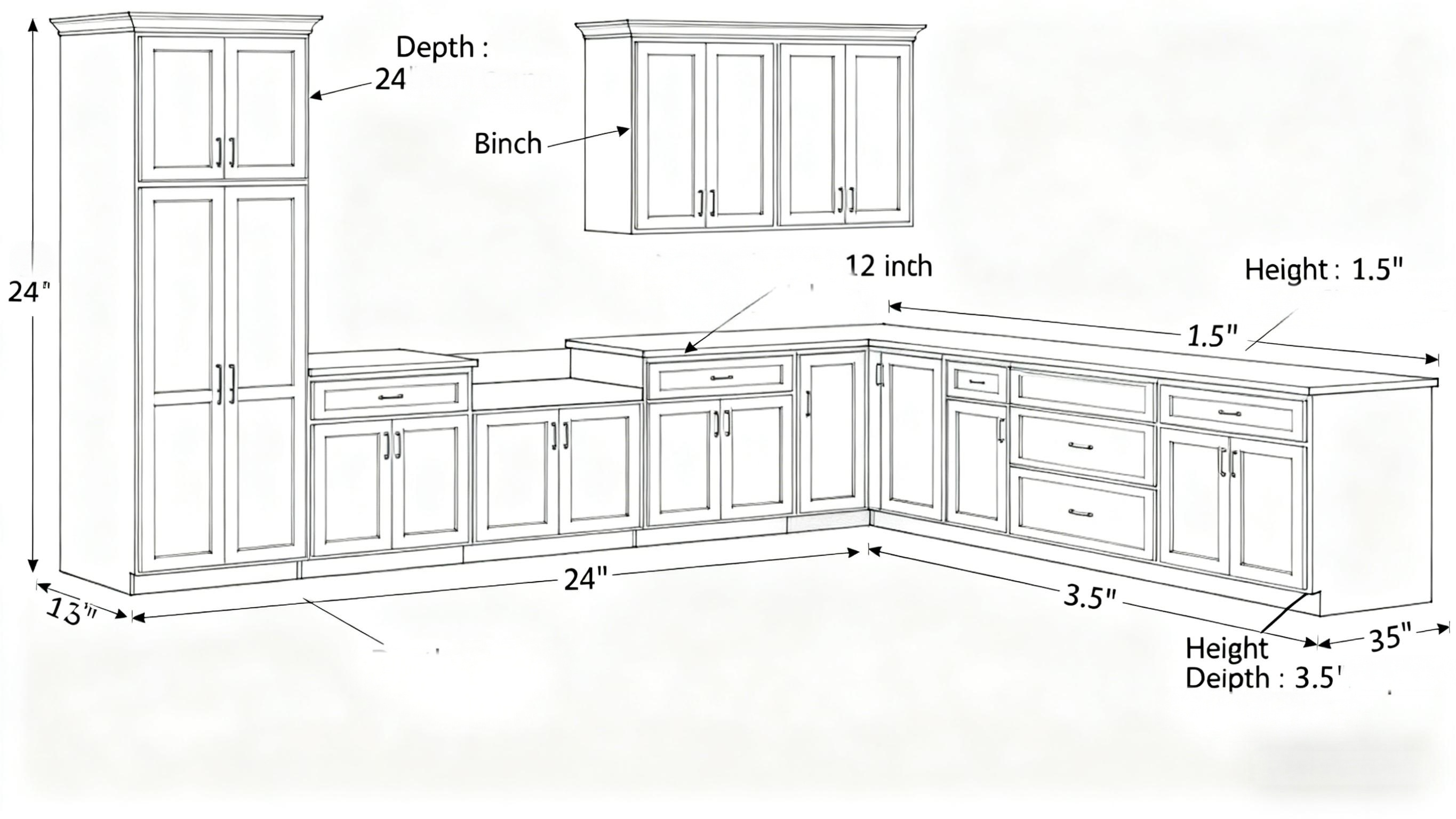
Choosing the right cabinet depth becomes easier when you can compare all the common sizes in one place. The chart below gives a quick look at the most used depths for different cabinet types. These numbers help you plan storage, appliance fit, and walkway comfort.
| Cabinet Type | Standard Depth | Notes |
|---|---|---|
| Base Cabinets | 24" | Most common for cooking and prep areas |
| Wall (Upper) Cabinets | 12" | Keeps workspace open + easy reach |
| Tall Pantry Cabinets | 12" or 24" | Shallow for visibility, deep for bulk items |
| Kitchen Island Cabinets | 24" (standard) / 27–30" (extra-deep) | Extra depth for more storage or large appliances |
| Appliance Cabinets | 24" | Fits built-in ovens, microwaves, and warming drawers |
| Sink Base Cabinets | 24" | Room for plumbing + garbage disposal |
You can use this chart as a quick reference when planning a remodel or comparing cabinet options. Each depth serves a different purpose, so the right choice depends on how you cook, how much you store, and how the kitchen layout flows.
Small kitchens need clever depth choices to stay functional. Shallow base cabinets—18" or 21"—help widen walkways in tight galley layouts. Upper cabinets often stay at 12" deep so the space feels open instead of boxed in. Many homeowners replace deep uppers with open shelves to reduce visual weight.
Shallow pantries (12") keep canned goods visible and prevent items from getting lost. Islands, if they fit, often use 12"–15" shallow storage on the back side so stools can still slide under comfortably. In very narrow kitchens, switching to 10–12" wall-mounted shelves instead of full-depth uppers improves movement and keeps prep zones easier to use.
A quick look at small kitchen choices:
| Feature | Typical Depth | Reason |
|---|---|---|
| Shallow base cabinets | 18–21" | More walkway space |
| Shallow pantry | 12" | Better visibility |
| Open shelves | 10–12" | Lighter feel |
| Slim island storage | 12" | Fits tight layouts |
Large kitchens allow more freedom. Many homeowners choose extra-deep base cabinets—27" or 30"—to store big pans, baking dishes, and appliances. Deep island cabinets (30"+) offer extra workspace and create a central prep hub.
Tall pantry cabinets often use the full 24" depth to hold bulk items. Some layouts add a second pantry zone for small appliances, often matched to the depth of nearby counters so everything lines up cleanly.
A large kitchen may also pair deep cabinets with tall ceilings. Upper cabinets at 15" deep give more storage for wide dinnerware, while 36" or 42" cabinet heights reach closer to the ceiling for a built-in look.
Examples of large kitchen setups:
| Feature | Depth | Benefit |
|---|---|---|
| Extra-deep base cabinets | 27–30" | More storage |
| Deep island | 30"+ | Larger prep surface |
| Full-depth pantry | 24" | Bulk storage |
| Deep uppers | 15" | Holds wider dishes |
Modern kitchens lean toward depth choices that support clean lines, smooth surfaces, and efficient storage.
Deeper drawers
Drawers often replace lower shelves since they use depth more effectively. A 24-inch cabinet can hold deep pot drawers, and extra-deep drawers in 27–30" cabinets keep cookware organized and easy to grab.
Minimalist flat-panel cabinets
Flat-panel doors look best when surfaces line up evenly. This trend encourages using deeper uppers or deeper refrigerator surrounds to create a true built-in effect. Clean lines matter more, so designers play more carefully with depth.
Open shelving vs. upper cabinets
Some contemporary designs skip upper cabinets entirely. Open shelves use a 10–12" depth, which makes the kitchen feel wider and brighter. Without deep uppers, base cabinets often go deeper to make up for lost storage. Islands may also gain more depth to balance the layout.
These depth choices create kitchens that feel airy, organized, and easy to use—exactly what modern homeowners look for.
Standard depths stay simple.
Base cabinets usually measure 24 inches deep, and wall cabinets stay around 12 inches deep. Tall pantry cabinets come in 12-inch or 24-inch options. These sizes work well for cooking, storage, and appliance fit.
Yes, but it depends on your layout.
Base cabinets can go to 27–30 inches in custom builds. Deeper cabinets add storage for large pots and pans, but they also shrink walkways and make items harder to reach in the back. It’s smart to check your kitchen flow before choosing an extra-deep setup.
They can, but only in certain spots.
Most upper cabinets stay at 12 inches so you don’t bump your head while cooking. Some kitchens use 15-inch uppers for more storage. Cabinets above a refrigerator can go 18–24 inches deep to match the appliance. For everyday wall cabinets, 12 inches still works best.
Shallow depths help small kitchens feel open.
Base cabinets at 18–21 inches deep improve walkways, and upper cabinets at 12 inches keep the room from feeling crowded. Shallow pantries (12") also help you see everything inside without digging.
Pantries come in two main sizes:
| Pantry Type | Depth | Best Use |
|---|---|---|
| Shallow Pantry | 12" | Easy visibility, small kitchens |
| Full-Depth Pantry | 24" | Bulk storage, larger kitchens |
Deeper pantries often work better when they include pull-out shelves or roll-out drawers.
Whenever possible, yes.
Lining cabinets up with appliances creates a cleaner look. Counter-depth refrigerators blend better with standard 24-inch cabinets, while full-depth fridges may need 30–36-inch side panels or a wall recess. Ovens, dishwashers, and microwaves usually match the 24-inch base cabinet depth.
They can, but mainly when they improve function.
Extra-deep drawers, full-depth pantries, and well-planned islands make a kitchen feel more high-end. Buyers often like the added storage and smooth workflow. Just avoid depths that hurt walkways or make the kitchen feel tight—balance matters more than size alone.
No, not all kitchen cabinets use a 24-inch depth.
Only base cabinets commonly follow the 24-inch standard. Upper cabinets are usually 12 inches deep, while pantry and specialty cabinets vary from 12–36 inches depending on placement and function.
The most common depths are:
Base cabinets: 24"
Wall (upper) cabinets: 12"
Tall pantry cabinets: 12" or 24"
These sizes work for most appliances, countertops, and workflow layouts.
Shallow cabinets work best in small kitchens.
Base cabinets at 18–21 inches deep open up walkways, and 12-inch uppers prevent the room from feeling tight. Shallow pantries (12") also help keep everything visible.
A 10×12 kitchen is considered moderate to small, but not tiny.
Depth planning becomes more important because walkways can shrink quickly when using full-depth cabinets. Many homeowners use:
Shallow bases on one wall
Standard bases + shallow uppers
A slim island or peninsula
to keep the space functional.
Buying cabinets—especially RTA or stock options—is almost always cheaper.
Custom-built cabinets offer custom depths, sizes, and materials, but they cost more due to added labor and fabrication time. For unusual layouts or special depth needs, custom may still be worth it.
A 24-inch sink is workable for small or minimalist kitchens, but most medium-to-large kitchens prefer 27–33 inch sinks.
The sink size affects cabinet depth and plumbing space, so a 24-inch sink requires:
A 27–30 inch sink base cabinet
Standard 24-inch cabinet depth for plumbing
Current trends affecting cabinet depth include:
Deeper drawers for better storage
15-inch deep upper cabinets in modern kitchens
Full-depth refrigerator surrounds for a built-in look
Extra-deep islands (27–30") for baking and family prep
Open shelving instead of deep upper cabinets in some designs
The shallowest practical cabinet depth is around 9–12 inches, usually for:
Wall cabinets
Shallow pantries
Island back-side storage
Narrow hall cabinets
These help save space while still offering usable storage.
Yes.
A 20-inch depth works well for tight layouts where 24-inch depth feels too bulky. This depth still supports drawers, organizers, and small appliances but gives extra walkway space.
Neutral colors usually increase appeal and resale value.
Top-performing colors include:
White
Soft gray
Greige
Natural wood tones
These colors pair well with different depth choices and make the kitchen feel larger.
Most are 12 inches, but not all.
Modern and high-end kitchens often use:
15-inch deep uppers for large plates
18–24 inch deep cabinets above refrigerators
Depth depends on style, appliance placement, and storage needs.
Often, yes—if the kitchen has space.
Deeper cabinets provide:
More storage
Better organization
Room for wide cookware or appliances
But they also cost more, and can reduce walkway clearance. They’re best in medium or large kitchens.
A standard counter depth is 25–26 inches, including the 1–1.5 inch overhang.
Extra-deep counters (27–30 inches) work well when:
You use oversized appliances
You want a bigger prep area
You have fewer upper cabinets
Pros:
More prep space
Fits larger appliances
Cleaner modern look
More room for décor or utensils
Cons:
Harder to reach items in the back
More expensive materials
May reduce walkway space
Not ideal for shorter users
The best resale-friendly counter height is 36 inches, which matches standard base cabinets.
It’s comfortable for most people, supports all major appliances, and fits both shallow and standard cabinet depths.
Standard cabinet depths—24 inches for base cabinets, 12 inches for uppers, and 12 or 24 inches for tall cabinets—fit most kitchens well. The best depth for your home depends on your appliances, storage needs, and how you move through the space. With careful planning and the right measurements, you can choose cabinet depths that make your kitchen comfortable, efficient, and easy to use.


