
Views: 0 Author: Site Editor Publish Time: 2026-04-09 Origin: Site


Choosing cabinets is not simple. Solid Wood Kitchen Cabinets and Laminate Kitchen Cabinets offer different benefits. Which one fits your kitchen best? In this article, you will learn how they compare in style, durability, and cost.
Solid Wood Kitchen Cabinets are built using natural timber rather than synthetic surfaces. They are typically constructed from solid wood panels or frames, sometimes combined with plywood for structural stability. This type of cabinet is widely chosen in projects that prioritize authenticity and long-term value.
Common wood types used in solid wood cabinets:
Oak: strong, visible grain, classic appearance; often used in traditional kitchens
Maple: smooth texture, light color; works well in modern or transitional designs
Walnut: darker tone, rich grain; often used in high-end or luxury kitchens
Hickory: highly durable, bold grain variation; suitable for rustic styles
These materials create a natural variation. No two cabinet doors look exactly the same. That uniqueness is one of the main reasons people choose solid wood.
Laminate Kitchen Cabinets are made using a layered construction method. Instead of solid wood throughout, they use an engineered core material with a decorative laminate surface applied on top. This structure allows for consistent finishes and controlled costs.
Typical materials used in laminate cabinets:
MDF (Medium Density Fiberboard): smooth, stable, ideal for painted or laminated surfaces
Particleboard: cost-effective, commonly used in budget-friendly cabinets
High-pressure or low-pressure laminate: creates the visible outer layer
Unlike solid wood, laminate surfaces are engineered. They are designed to look uniform and consistent across all cabinet doors.
They are often used in kitchens where functionality comes first. Busy households, rental properties, or contemporary designs tend to favor laminate because it is easy to manage and visually consistent.
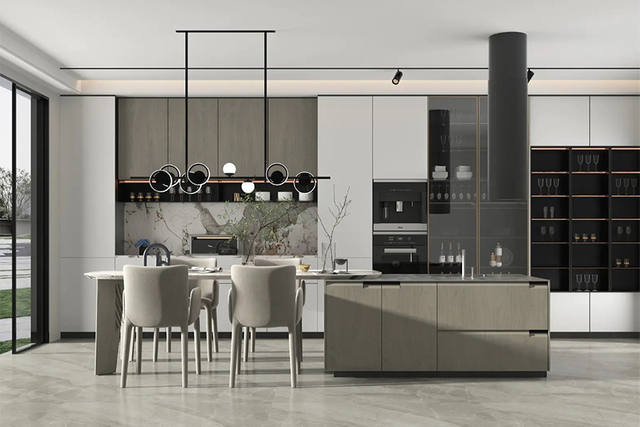
When comparing Solid Wood Kitchen Cabinets and Laminate Kitchen Cabinets, appearance is often the first decision factor. Solid wood delivers a natural, organic look. Each panel shows its own grain pattern. That makes every kitchen feel unique and slightly different.
Laminate cabinets take a different approach. They focus on uniformity and control. The surface looks consistent across all doors and panels. It works well in modern kitchens where clean lines and symmetry matter.
How they differ in design use:
Solid wood:
Brings warmth and depth into the kitchen space
Fits traditional, classic, or luxury interiors
Natural tones dominate unless painted
Laminate:
Offers wide color and texture options
Supports modern, minimalist, or bold designs
Can mimic wood, stone, or glossy finishes
In real projects, we often see this pattern. People choose solid wood for character. They choose laminate for flexibility and visual control.
Durability becomes critical in kitchens used every day. Solid wood is structurally strong. It holds up well over time. Many homeowners keep these cabinets for decades. However, it reacts to humidity. Expansion or contraction may happen in certain climates.
Laminate cabinets rely on engineered cores and protective surfaces. They perform well in busy kitchens. They resist scratches and moisture better on the surface. Still, their lifespan depends on the quality of the core material.
Key performance differences:
Solid wood:
Strong internal structure
Long lifespan under proper care
Sensitive to moisture changes
Laminate:
High resistance to surface wear
Stable performance in humid environments
Less structural depth compared to solid wood
In high-use kitchens, laminate often feels more practical. In long-term homes, solid wood often feels more durable.
Daily maintenance affects long-term satisfaction. Solid wood requires more attention. It should be cleaned carefully. Too much water can damage the surface. Over time, refinishing may be needed to restore its original look.
Laminate cabinets are easier to handle. Their surface is smooth and sealed. You can clean them quickly after cooking. They resist stains, grease, and moisture more effectively in daily use.
Maintenance experience in real life:
Solid wood:
Needs gentle cleaning habits
May require periodic refinishing
More care in humid conditions
Laminate:
Simple wipe-clean routine
Low daily maintenance effort
No refinishing required
For busy households, laminate often reduces cleaning time. For long-term value, solid wood offers repair flexibility.
Cost often drives the final decision. Solid wood kitchen cabinets sit in the premium range. They require natural materials and skilled craftsmanship. That increases the upfront investment.
Laminate kitchen cabinets are more budget-friendly. They use engineered boards and efficient production methods. This helps control costs while still offering attractive finishes.
Budget-related differences:
Solid wood:
Higher initial cost
Strong long-term investment value
Suitable for permanent homes or upgrades
Laminate:
Lower upfront cost
Good for budget-conscious projects
Ideal for rentals or fast renovations
Solid Wood Kitchen Cabinets are often seen as a premium choice. They bring natural beauty into the kitchen. You can feel the texture and see real grain variation. This makes the space look warmer and more inviting. Many homeowners choose them when they want a long-lasting and high-end kitchen.
Why people choose solid wood cabinets:
Natural beauty:
Each door looks different due to real wood grain
It creates depth and a more authentic kitchen atmosphere
It fits classic, farmhouse, and luxury designs well
Durability:
Strong internal structure supports long-term use
Cabinets can last decades under normal conditions
They perform well in permanent home setups
Refinishing ability:
Surfaces can be sanded and restored over time
Scratches or wear do not mean full replacement
It helps extend the cabinet lifespan significantly
However, they are not perfect. There are some trade-offs you need to consider.
Limitations of solid wood cabinets:
Higher cost:
Natural materials and craftsmanship increase price
Installation and finishing may also cost more
It may not fit tight renovation budgets
Sensitivity to humidity:
Wood can expand or shrink in changing climates
Poor ventilation may lead to warping over time
It requires careful environmental control
In custom cabinet solutions, companies like CestlaV Home often combine solid wood doors with stable internal structures. This helps balance strength and performance in real kitchens.
Laminate Kitchen Cabinets are designed for practicality. They offer a clean and consistent appearance. Many modern kitchens use them because they are easy to maintain and budget-friendly. They also provide a wide range of design options.
Why people choose laminate cabinets:
Affordability:
Lower material and production costs
Suitable for budget-controlled projects
Ideal for rentals or quick upgrades
Easy maintenance:
Smooth surface makes cleaning simple
Resistant to grease, stains, and daily spills
No need for refinishing or special care
Modern look:
Consistent finish across all panels
Available in many colors and textures
Works well in minimalist or contemporary kitchens
Despite these advantages, laminate also has some limitations.
Limitations of laminate cabinets:
Limited repair options:
Surface damage is harder to fix
Peeling or chipping often requires replacement
It does not allow sanding or refinishing
Less natural feel:
Lacks real wood texture and depth
May feel less premium in high-end kitchens
Visual effect depends on surface quality
In practical cabinet systems, laminate is often used in combination with other finishes. It helps reduce cost while still keeping a clean design.
Long-term value depends on how you use your kitchen. It is not just about the price you pay today. It also includes how long the cabinets last and how easy they are to maintain.
From an investment perspective, solid wood often provides stronger long-term value. It lasts longer and can be restored. Even after years of use, it can still look new after refinishing. This makes it a good choice for permanent homes.
Laminate focuses more on short- to mid-term practicality. It reduces upfront cost. It also lowers daily maintenance effort. However, once the surface is damaged, replacement is more likely than repair.
Key factors affecting long-term value:
Replacement vs. refinishing:
Solid wood allows multiple restorations
Laminate usually requires panel replacement
Usage environment:
Busy kitchens benefit from laminate durability
Stable environments favor solid wood longevity
Budget strategy:
Higher upfront cost vs. lower initial spending
Long-term savings vs. short-term affordability
To make this clearer, here is a structured comparison:
Value Factor |
Solid Wood Kitchen Cabinets |
Laminate Kitchen Cabinets |
|---|---|---|
Initial Investment |
Higher |
Lower |
Lifespan |
Very long |
Moderate |
Maintenance Effort |
Medium to high |
Low |
Repair Capability |
High (refinishable) |
Low (replacement needed) |
Long-Term Value |
Strong for permanent homes |
Good for short-term or budget use |
When selecting between Solid Wood Kitchen Cabinets and Laminate Kitchen Cabinets, style often comes first. People usually have a clear vision. Some want warmth and natural texture. Others prefer clean lines and a modern feel. The material you choose should match that vision and support the overall kitchen design.
Traditional, classic, or luxury kitchens:
Solid Wood Kitchen Cabinets are usually the better fit in these styles because they bring natural grain, depth, and visual richness into the space. They work well alongside decorative elements such as moldings, framed doors, and warm color palettes. Over time, they maintain a timeless appearance, so the kitchen does not feel outdated quickly, which is important for homeowners who focus on long-term value and aesthetics.
Modern, minimalist, or contemporary kitchens:
Laminate Kitchen Cabinets are often preferred in these designs because they provide smooth, flat surfaces and consistent finishes across all panels. They support bold colors, matte textures, and high-gloss looks, which are common in modern interiors. This consistency helps create a clean and organized visual effect, especially in open-plan kitchens where visual flow matters.
Daily habits play a big role in cabinet performance. A kitchen used heavily every day will require materials that are easy to maintain and durable under frequent use. On the other hand, a low-use kitchen allows for more flexibility in material choice.
Busy households vs. high-use kitchens:
Laminate Kitchen Cabinets are often more practical in busy environments because they are easier to clean and more resistant to stains, grease, and moisture. In a family kitchen where cooking happens daily, surfaces need to handle repeated wiping and exposure to heat and humidity. Laminate reduces the effort required for maintenance, which makes daily use more convenient.
Low-use kitchens or design-focused spaces:
Solid Wood Kitchen Cabinets work well in kitchens where usage is lighter or where design is the main priority. They offer a premium feel and long-term durability, and they can be refinished if the surface shows wear over time. In these environments, the extra care required for solid wood becomes less of a burden and more of a worthwhile investment in aesthetics.
Budget decisions are not only about cost. They also involve how the project is structured and what level of quality is expected in different areas of the kitchen. Choosing between Solid Wood Kitchen Cabinets and Laminate Kitchen Cabinets often depends on how much you are willing to invest and where that investment matters most.
Full kitchen remodel vs. high-end renovation:
Solid Wood Kitchen Cabinets are commonly selected for full remodels or premium projects because they enhance the overall value of the kitchen and the home. They provide long-term durability and a more refined appearance, which makes them suitable for homeowners planning to stay long-term or aiming for a higher-end finish.
Partial upgrade or budget-controlled projects:
Laminate Kitchen Cabinets are more suitable when the goal is to control costs while still improving the kitchen’s appearance. They allow homeowners to update cabinets without a large financial commitment and are ideal for rental properties or quick renovations where efficiency matters more than long-term material value.
Balancing cost and quality in real projects:
Many homeowners choose a mixed approach rather than relying on a single material. They may use solid wood in highly visible areas such as kitchen islands or upper cabinets, while selecting laminate for base cabinets or high-use zones. This strategy helps balance visual impact and budget efficiency, and it is often supported by custom cabinet providers like CestlaV Home who offer flexible design and material combinations.
Choosing between Solid Wood Kitchen Cabinets and Laminate Kitchen Cabinets depends on style, budget, and daily use. Solid wood offers natural beauty and long-term value, while laminate provides easy care and cost efficiency. CestlaV Home delivers flexible custom cabinet solutions, helping homeowners balance design, durability, and budget needs.
A: Solid Wood Kitchen Cabinets use natural wood, while Laminate Kitchen Cabinets use layered boards with a smooth surface.
A: Solid Wood Kitchen Cabinets and Laminate Kitchen Cabinets suit different needs; one offers durability, the other easy maintenance.
A: Yes, Laminate Kitchen Cabinets usually cost less than Solid Wood Kitchen Cabinets in most projects.
A: Solid Wood Kitchen Cabinets and Laminate Kitchen Cabinets differ; solid wood often lasts longer with proper care.
A: Laminate Kitchen Cabinets are easier to clean than Solid Wood Kitchen Cabinets in daily kitchen use.


