Melamine-Finished Wall Panels – Durable, Modern & Versatile Wall Cladding for Contemporary Interiors
Melamine-finished wall panels—also known as laminate wall panels or melamine wall finishes—are one of the most practical and design-forward wall surfacing solutions today. They combine the durability of engineered materials with the aesthetic warmth of wood textures, stone patterns, and modern color tones.
Cestlav Home offers melamine wall panels designed for bedrooms, living rooms, dining rooms, hallways, and full-home architectural wall cladding—giving homeowners and designers a premium finish with superior cost-efficiency.
Why Choose Melamine or Laminate Wall Panels?
1. Highly Durable & Scratch-Resistant Surface
Melamine surfaces resist:
scratches
stains
impact
moisture
fading
Perfect for high-traffic residential areas.
2. Aesthetic Variety with High-End Finishes
Available in:
natural wood grains
matte textures
modern minimalist tones
warm brown & walnut finishes
Nordic-inspired light wood
dark charcoal or modern grey
Panels stay beautiful without requiring repainting or refinishing.
3. Cost-Effective Alternative to Solid Wood Walls
Compared with solid wood wall cladding, melamine wall panels offer:
Ideal for modern home renovations.
4. Quick Installation, Minimal Maintenance
Melamine wall panels install cleanly over flat walls and require almost no upkeep. Perfect for busy households or projects needing efficient installation timelines.
⭐ Melamine Wall Panel Types
Where Melamine Wall Panels Work Best?
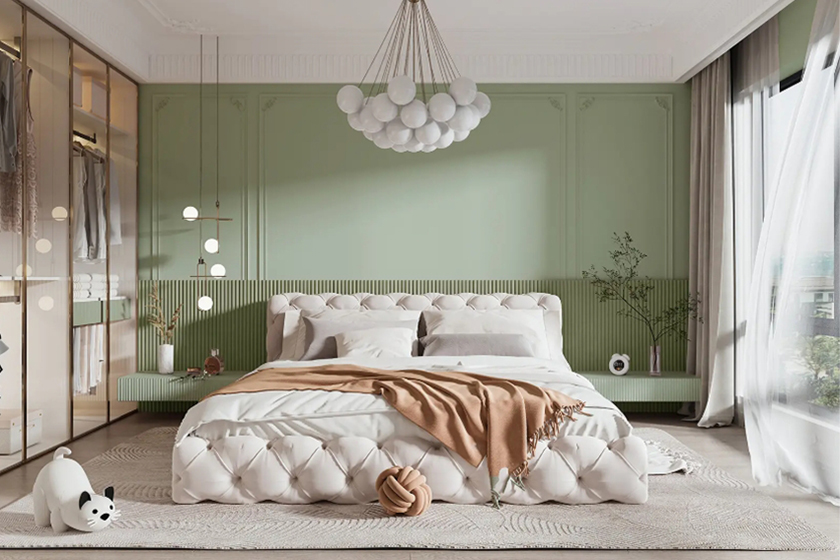
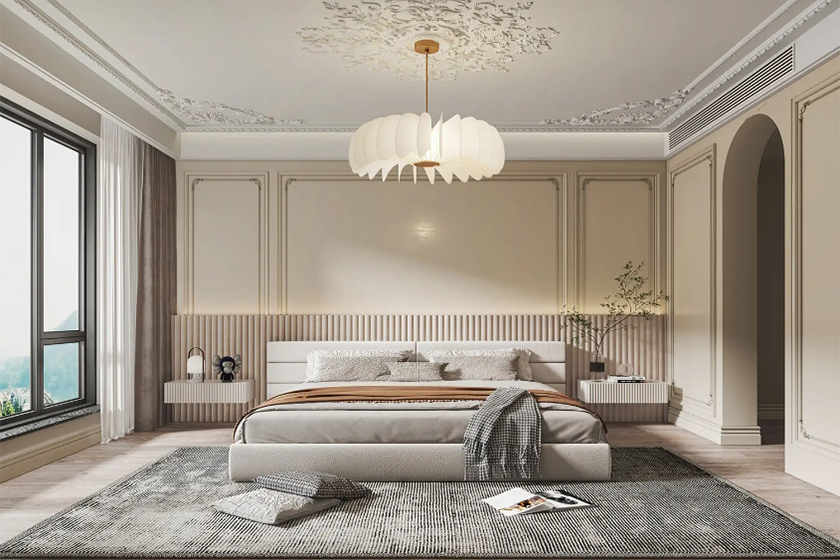
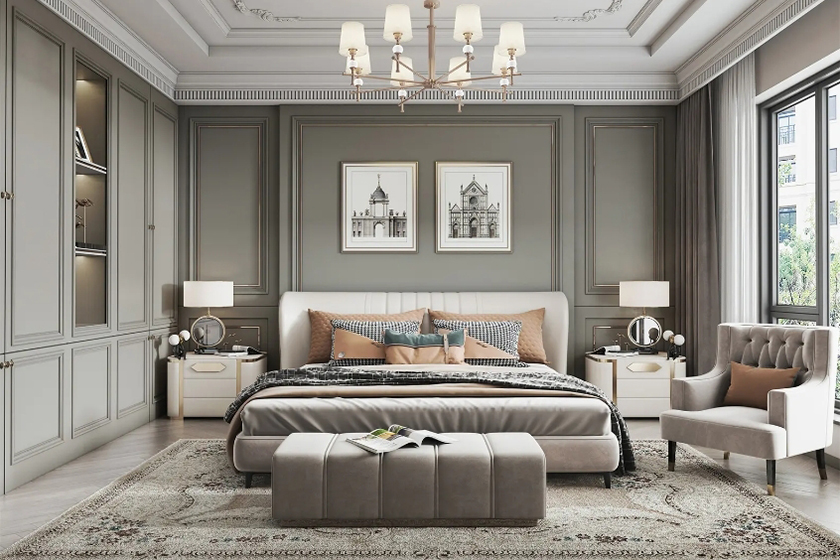
Bedrooms
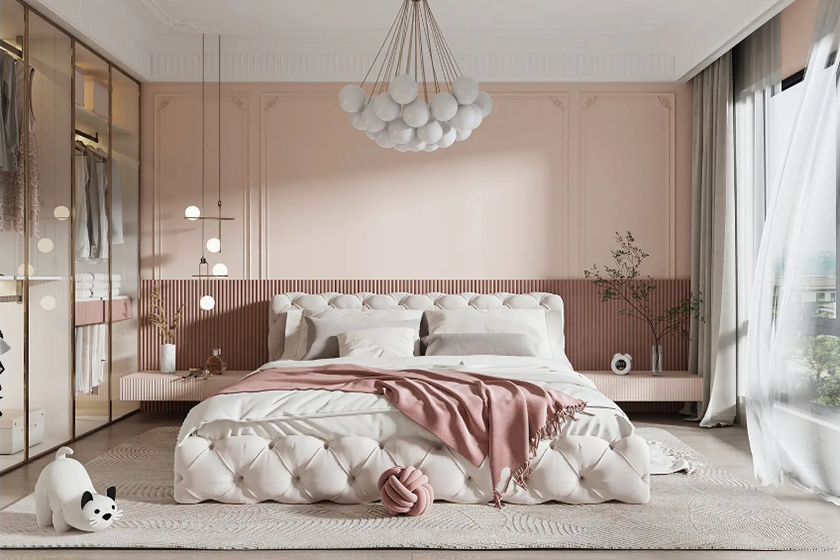
Featured headboard walls, soft textures, warm wood tones.
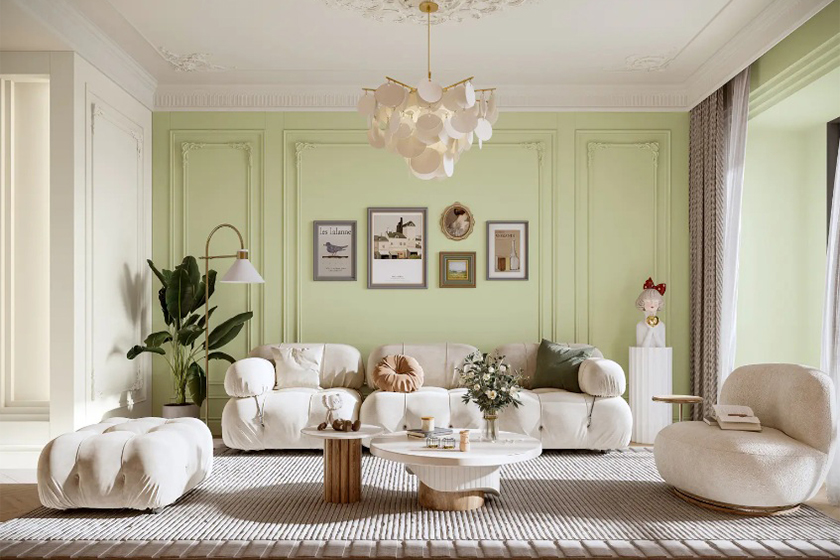
Living Rooms
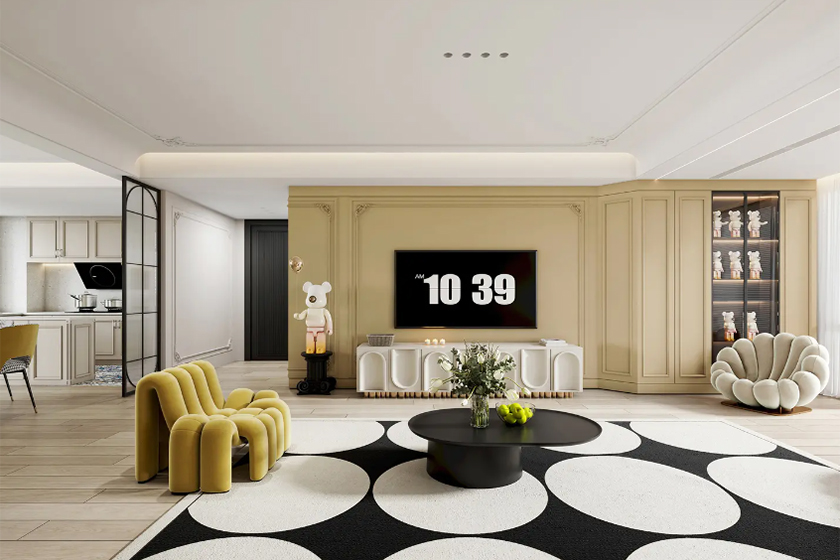
TV background walls, accent panels, full-height architectural cladding.
Dining Rooms
Elegant and durable surfaces resistant to scratches and stains.
Hallways & Entryways
High durability means “no repainting” even with daily usage.
Home Offices
Noise reduction + warm visual atmosphere.
✅ Bedroom Layout Essentials
| Element | Why It Matters | Recommended Positioning |
| Bed Placement | Defines the focal point and circulation flow | Centered on main wall or aligned with window-free wall |
| Nightstands | Adds convenience & visual balance | Should match bed width; placed symmetrically |
| Wardrobe / Wall Panels | Adds storage + texture, improves vertical design | Installed behind bed, or on side walls to create depth |
| Lighting Layers | Enhances comfort & luxury mood | Combination of bedside lamps + ceiling light + indirect lighting |
| Accent Wall | Creates visual interest, ideal for melamine wall panels | Behind the bed or opposite the bed |
| Walking Clearance | Ensures smooth daily movement | 24–36 inches around bed |
✅ Living & Dining Room Layout Essentials
| Element | Purpose | Recommended Positioning |
| Space Zoning | Defines two functional areas without walls | Use rugs, furniture placement, or feature wall panels to separate zones |
| Dining Area Placement | Creates logical flow between kitchen → dining → living | Ideally near the kitchen side; rectangular tables maximize small spaces |
| Living Seating Area | Forms the main social zone | Sofa facing TV wall or feature wall; melamine wall panels can enhance texture and acoustics |
| Lighting Layers | Provides different atmosphere for dining vs. living | Pendant lights over dining; ambient + accent lighting for living |
| Feature Wall Panels | Adds depth, warmth, and modern luxury | Install melamine panels behind TV, fireplace, or on the longest wall |
| Traffic Flow | Keeps circulation smooth without blocking paths | 30–36 inches minimum walking space between zones |
Material & Structural Characteristics
Melamine Surface Layer
stain-resistant
fade-resistant
easy to clean
consistent texture
Engineered Core Options
high-density MDF
particle board core
laminate composite core
Edge Finishes
seamless melamine edging
ABS edge banding
beveled or square edges
Installation Guidance (Simplified for Homeowners & Contractors)
Panels can be installed directly over drywall or concrete walls
Use combination of adhesive + concealed nails for best results
Leave slight expansion gaps for temperature changes
Pair with matching furniture panels for a cohesive interior
FAQ – Melamine & Laminate Wall Panels
What is the cheapest way to panel a wall?
Melamine or laminate wall panels are among the most cost-efficient full-wall coverings due to their low material and installation cost.
What is the cheapest interior wall covering?
PVC, MDF, and melamine panels are all low-cost options that still provide a high-quality finish.
Can you install wall panels over drywall?
Yes. Melamine wall panels can be installed directly over drywall as long as the wall is smooth and clean.
Which type of wall panel is best?
For homeowners looking for durability + design + affordability, melamine panels are the best balance. Solid wood is more premium but requires maintenance.
What are the disadvantages of paneling?
Low-quality panels may swell in high humidity, but melamine surfaces significantly reduce this risk due to their laminated protective finish.
Is paneling outdated in 2025?
No—melamine & laminate panels are trending due to modern textures, vertical slats, fluted panels, and warm Nordic styles.
How to cover an unsightly wall on a budget?
Melamine panels are perfect for hiding imperfections without needing demolition or repainting.
What is the disadvantage of melamine board?
Melamine board’s primary disadvantages come from its composite wood core, not the melamine surface.
Key drawbacks include:
Lower moisture resistance compared to solid wood or high-pressure laminate (HPL)
Edges can swell if not properly sealed
Not suitable for continuous water exposure
Limited reparability—deep scratches can’t be sanded or refinished
For wall panels, these disadvantages are minimal because the product isn’t exposed to constant direct water.
What is melamine wall finish?
A melamine wall finish is a decorative panel surface created by pressing resin-infused paper onto MDF or particle board.
Benefits include:
It is widely used for bedroom, living room, dining room, and feature walls.
What is the difference between laminate and melamine finish?
Melamine Finish
Laminate Finish (HPL)
For wall panels, melamine is more cost-efficient and visually consistent, making it the preferred choice.
What is the difference between melamine finish and veneer finish?
Melamine Finish
Wood Veneer Finish
Real wood surface
More premium and natural
Requires careful maintenance
Prone to scratches, UV fading, water marks
Melamine is the better choice for homeowners wanting a durable, low-maintenance wall panel.
What happens when melamine gets wet?
The melamine surface itself is water-resistant, but the core board (MDF/particle board) may swell if water enters through edges or screw holes.
Proper edge sealing prevents this issue in wall panel applications.
Is melamine cheap looking?
Modern melamine is not cheap-looking—especially premium versions with:
High-quality melamine is widely used in contemporary interiors and often visually rivals real wood veneer.
Is melamine finish glossy?
Melamine can be:
matte
semi-matte
textured
glossy
Most modern wall panels use matte or wood-textured melamine because it gives a natural, premium look.
Is melamine cancerous?
Melamine used in furniture and wall panels is safe.
It does not release toxic levels of chemicals when used in construction.
It is not classified as a carcinogen when used in building materials.
Past food-related melamine concerns do NOT apply to household melamine boards.
Is melamine a plastic or ceramic?
Melamine resin is a type of thermosetting plastic, but when applied to panels, it becomes a hard, scratch-resistant surface.
Its feel is closer to a wood-like laminate rather than typical “plastic.”
What is better, MDF or melamine?
They are not direct alternatives:
Melamine-faced MDF is one of the most commonly used combinations for modern wall panels.
How long does melamine last?
High-quality melamine panels can last 15–25 years with proper care.
It does not warp, fade, or require repainting—making it ideal for long-term wall cladding.
Is melamine banned in Europe or the USA?
No.
Melamine boards are widely used and fully allowed in both regions for furniture and construction.
What are the dangers of melamine?
Only relevant in food contamination (not related to wall panels).
For architectural use, melamine is considered stable, non-toxic, and safe.
What is more expensive, melamine or laminate?
Laminate (HPL) is typically more expensive because it:
Melamine offers the best balance of price + aesthetics for wall panels.
How do I know if I have laminate or melamine?
Melamine
Laminate
A cross-section inspection usually reveals the difference.
Are there different grades of melamine?
Yes. Grades vary in:
thickness
core board density
stain resistance
scratch resistance
texture realism
Premium melamine panels—like those used in high-end interiors—feature synchronized embossed wood grains and durable ABS edging.
What does melamine look like?
Melamine can mimic:
natural oak
walnut
teak
stone textures
minimalist matte colors
Modern designs look nearly identical to real wood veneer.